



THE REAL REASON
Your soil stopped holding air months, even years ago.
Bagged potting mix is mostly peat. Peat is spongy on day one and dense by month three — every watering packs it tighter, until the pockets of air between the particles collapse. Roots don't just drink. They breathe. In compacted soil, water fills the space oxygen used to occupy, and the roots suffocate in mud. It looks exactly like overwatering. It isn't.

WHY NOTHING HAS WORKED
You can't fix a structure problem with a watering schedule.
So you water less. Then more. You buy a moisture meter, poke holes with a chopstick, bottom-water in the sink, set reminders on your phone. None of it works for long, because none of it changes what's actually in the pot. You didn't fail your plants. You were adjusting the one variable that was never the problem.

SO WE DIDN'T MAKE A FERTILIZER
We replaced the dirt. That's the whole idea.
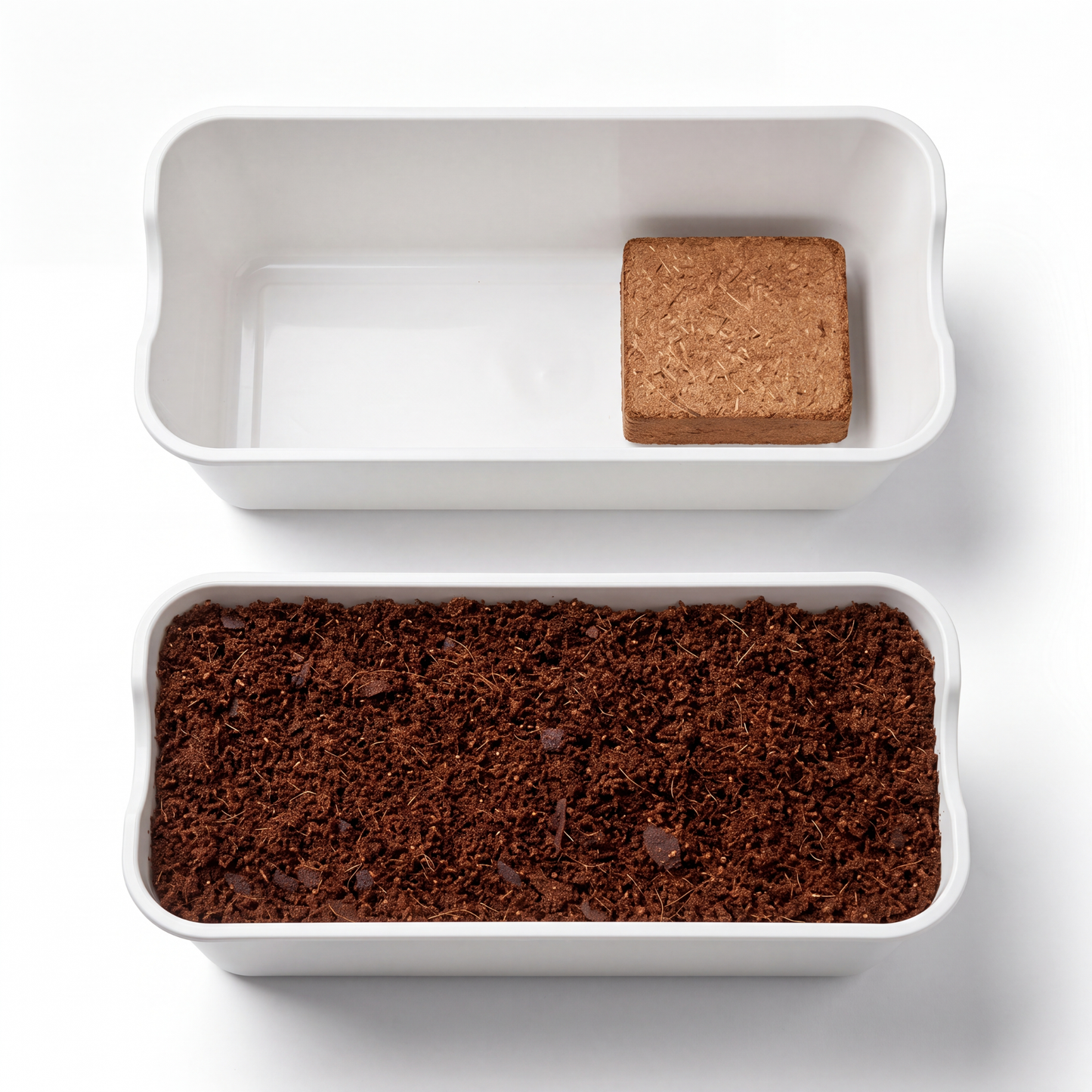
Coconut coir is the fiber from a coconut husk, compressed into a brick. Add water and it expands into a loose, fibrous medium that holds moisture and air at the same time — it drains in seconds, rewets instantly instead of repelling water, and never packs into a brick at the bottom of your pot. It's not a treatment. It's the house your roots should have been living in.
Frequently asked questions
Learn all about how to properly use coco coir.
-
The Starter Pack (10 Slabs) expands to generate roughly 12 quarts (3 gallons) of loose potting soil. This is enough to repot up to 6 standard 4-inch desktop plants, 2 medium 6-inch houseplants, or up to 20 tiny succulents. If you have a larger indoor collection or floor-sized plants, we highly recommend the Planter Pack (20 Slabs). -
Coco coir is an inert, sterile growing medium, which is exactly why it keeps pests and mold away. Because it lacks built-in fertilizer, you will want to add liquid houseplant nutrients or organic plant food when you water your plants to give them the fuel they need to grow massive, vibrant leaves. -
It is completely mess-free! Simply place one slab into a bucket, container, or large bowl, add about 3 to 4 cups of warm water, and watch it expand into premium, fluffy soil in under 5 minutes. The best part? You only expand what you need for that single day, keeping the rest of your kitchen clean. -
Yes, 100%. Traditional potting soils sit in damp, open bags at outdoor garden centers where fungus gnats live and lay eggs. Our coconut coir slabs are completely dehydrated and heat-sterilized at the source, ensuring absolutely zero bugs or pest larvae enter your apartment. -
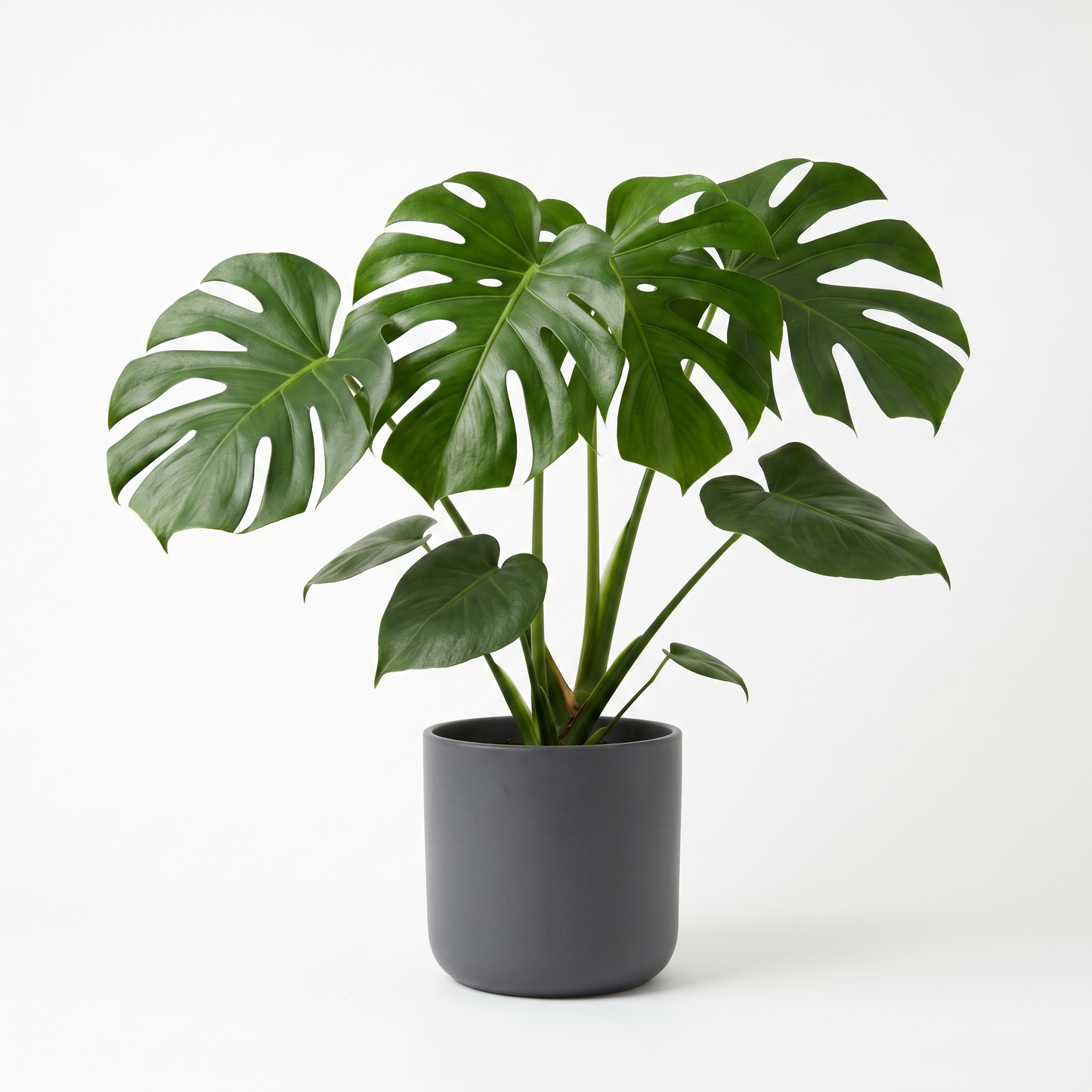
Absolutely. Coco coir is highly versatile and works beautifully for Monstera, Pothos, Philodendrons, Ferns, and Succulents. For moisture-loving plants, use it as-is. For desert plants or tropical variants that prefer extra drainage, you can easily blend it with perlite or orchid bark.